The Memory Mastery System Explained
Ever wondered why you forget things so quickly? The Memory Mastery System is the key to turning fleeting information into lasting knowledge. Here’s how it works.
You read something once. It clicks. It feels obvious. And yet… a few days later, it’s gone. That’s not bad memory. That’s incomplete learning.
🚫 The Illusion of Knowing
Most learning feels smooth because it is smooth. Reading, watching, revisiting — it creates familiarity. But here’s the truth:
Easy input rarely becomes lasting knowledge.
🔄 The System Behind Real Learning
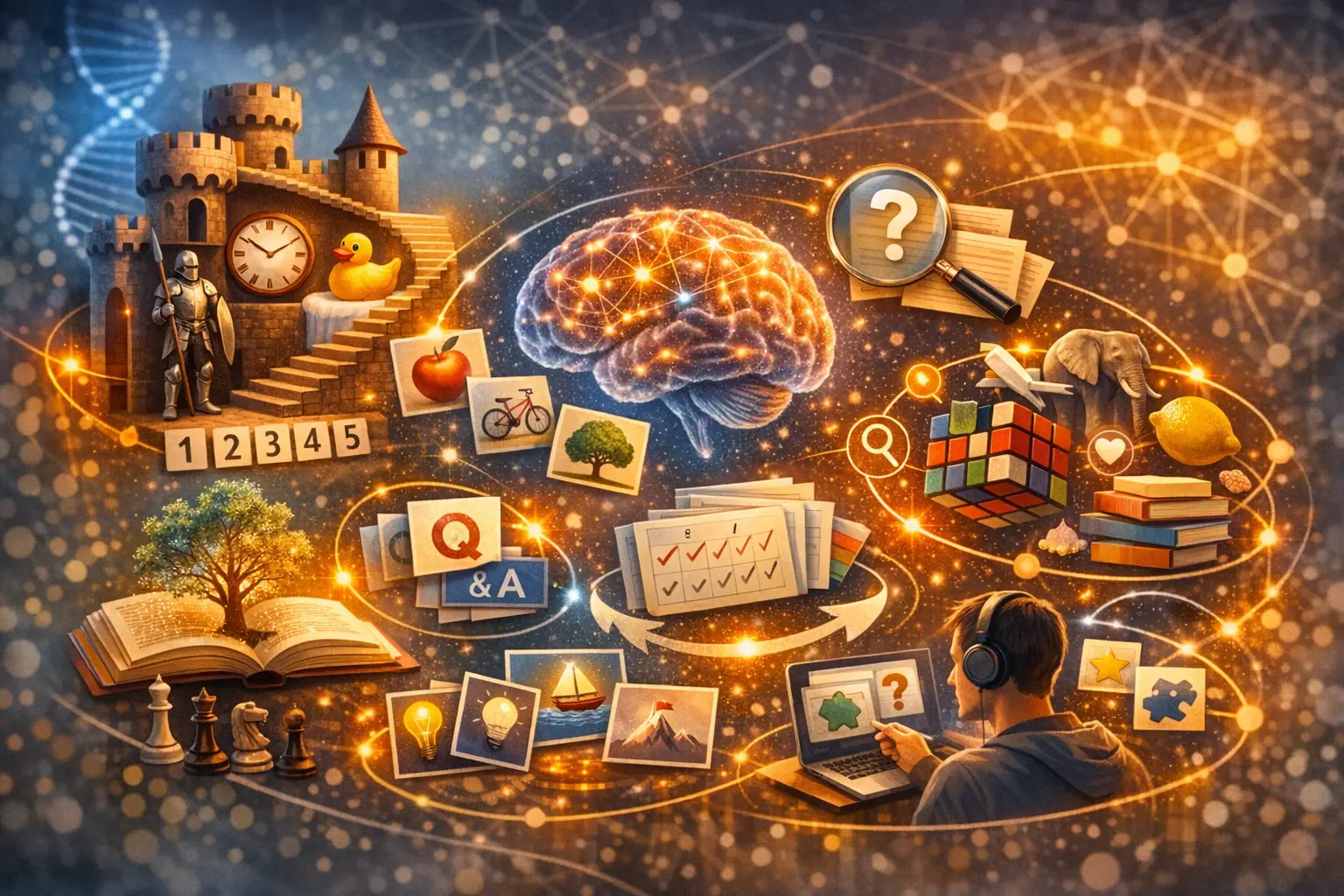
Strong learning isn’t random. It’s structured. It rests on three pillars:
- Core Processes → how you practice
- Encoding Tools → how you understand
- Biological Support → how your brain functions
Miss one, and retention drops.
⚡ Pillar 1: Core Processes (How You Practice)
This is where most people go wrong. What actually works:
- Active Recall → retrieve, don’t reread
- Spaced Repetition → revisit over time
- Interleaving → mix topics to build flexibility
Learning grows when recall feels effortful.
🧩 Pillar 2: Encoding (How You Understand)
Before remembering, you need to make it meaningful. What strengthens encoding:
- Feynman Technique → explain simply
- Chunking → break complexity into parts
- Association → link to existing knowledge
- Visualization → turn ideas into images
- Memory Palace → place ideas spatially
- Emotion/Story → attach meaning
The brain remembers connections, not isolated facts.
🌙 Pillar 3: Biological Support (How Your Brain Works)
Even perfect techniques fail without this.
- Sleep → consolidates memory
- Recovery → prevents cognitive overload
No recovery = no retention.
🔁 The Hidden Loop
Learning isn’t one step. It’s a cycle: Understand → Recall → Apply → Rest → Repeat Each loop strengthens the next.
🎯 The Real Shift
Stop focusing on: “Did I study this?” Start asking: “Did I engage with this?” Because learning isn’t about consuming more. It’s about building a system that makes knowledge stick.